

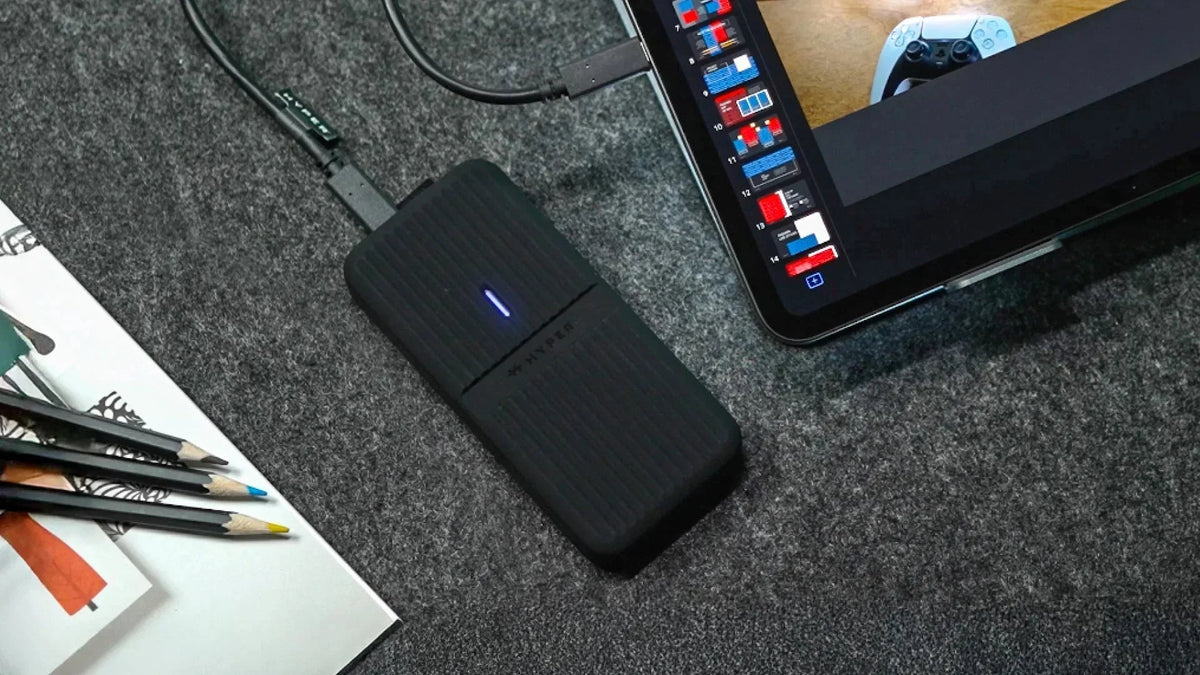
External SSDs have improved quickly, but connection limits have continued to hold them back. Even high-end NVMe drives often run far below their rated speeds when placed in external enclosures. USB4 V2 changes that by doubling available bandwidth and allowing external storage to operate much closer to native PCIe performance.
This article explains what USB4 V2 is, how it differs from earlier USB and Thunderbolt standards, and why 80Gbps makes a real difference for external SSD performance.
What Is USB4 V2?
USB4 V2 is the next generation of the USB4 standard. It increases maximum bandwidth from 40Gbps to 80Gbps and improves how PCIe data is carried over a USB-C connection. This allows external devices like NVMe SSDs and PCIe expansion modules to move data with far less overhead.

Unlike earlier USB standards that focused on broad compatibility, USB4 V2 is designed for sustained high-throughput use cases. Storage, media, and compute workloads benefit most from this shift because they rely on consistent data transfer rather than short bursts of speed.
USB4 V2 maintains backward compatibility with USB4, Thunderbolt 4, and Thunderbolt 5 hosts, which means devices can scale performance based on the connected system without changing cables or ports.
Why 80Gbps Matters for External SSDs
Modern NVMe SSDs are capable of extremely high sustained speeds. Many external enclosures cannot keep up because the connection itself becomes the limiting factor.
With USB4 V2, that bottleneck is largely removed.
At 80Gbps, there is enough bandwidth to support full PCIe Gen4 x4 performance in real-world use. Large file transfers complete faster, high-resolution video can be edited directly from an external drive, and heavy workloads stay responsive over long sessions.
The difference is not just peak speed. It is consistency. USB4 V2 allows external SSDs to maintain performance without sudden slowdowns caused by bandwidth limits.

USB4 V2 Compared to Earlier Standards
Earlier USB and Thunderbolt standards cap external PCIe performance well below what modern NVMe drives can deliver. While USB4 and Thunderbolt 4 improved flexibility, both remain limited to 40Gbps.
USB4 V2 doubles that ceiling. This allows external storage to behave much more like internal PCIe hardware, especially when paired with a capable controller, proper cooling, and sufficient power delivery.
For users who regularly work with large files or sustained workloads, the difference is immediately noticeable.
Why Many External SSD Enclosures Fall Short
Not all external enclosures deliver the same results, even when they claim high-speed support. Common limitations include restricted PCIe tunneling, thermal buildup that causes throttling, and insufficient power for high-draw NVMe drives.
USB4 V2-based enclosures are designed to avoid these issues. They provide enough bandwidth for full PCIe Gen4 performance, support better thermal management, and allow for external power when needed to keep performance stable under load.
These factors matter more than advertised peak speeds when evaluating real-world storage performance.

Who Benefits Most From USB4 V2 Storage
USB4 V2 is best suited for users who rely on sustained performance rather than occasional transfers.
Creators can work directly from external SSDs without copying projects to internal storage. Large video timelines, high-resolution assets, and long sessions remain smooth and responsive.
Developers and engineers can handle large datasets, builds, and local compute tasks without internal expansion. External PCIe storage becomes a practical extension of the system rather than a compromise.
Power users and IT teams benefit from faster data movement, simpler setups, and the ability to standardize high-performance external storage across multiple devices.
USB4 V2 Marks a Shift in External Storage Performance
For years, external SSDs have been limited more by their connection than by the drives themselves. USB4 V2 changes that balance.
With 80Gbps bandwidth and improved PCIe support, external storage like the HyperDrive Next USB4 M.2 PCIe Enclosure can finally deliver performance close to what users expect from internal hardware. For workflows that depend on speed, consistency, and flexibility, USB4 V2 represents a meaningful step forward.


Hyper Showcases Award-Winning Power and Connectivity Solutions at CES 2026
From Storage to Compute: How USB4 Enables External PCIe Expansion for AI Workflows
Share: